
METAMORPHOSIS by Athanasios Birlis
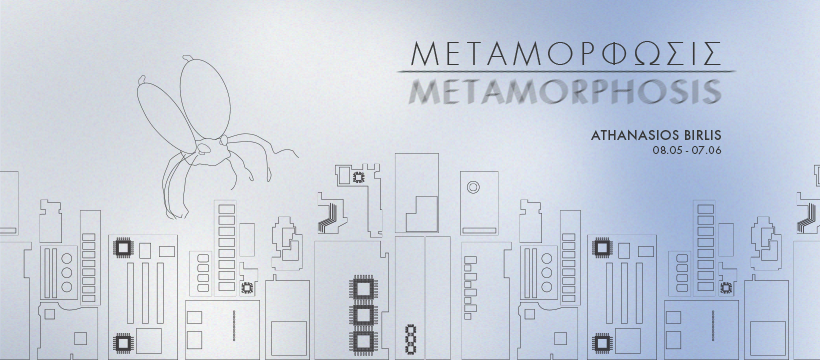
The Herakleidon Museum presents “METAMORPHOSIS / ΜΕΤΑΜΟΡΦΩΣΙΣ”, an exhibition by Thanasis Birlis, curated by Vasiliki Papakosta, from May 8 to June 7, 2026, in the Museum’s temporary exhibition galleries.
Metamorphosis brings together works from all creative periods of Thanasis Birlis and highlights the core of his artistic practice: the transformation of everyday, seemingly useless materials into carriers of meaning and aesthetic experience.
The exhibition marks the culmination of a broader artistic narrative that began with “Proem Metamorphosis / Προοίμιο Μεταμόρφωσης”, presented from March 20, 2026—the day of the Spring Equinox—at the Herakleidon Museum Shop.
Who, ultimately, is Thanasis Birlis?
Or, perhaps more essentially, what is he? A successful entrepreneur, an active citizen, a photographer, a visual artist. The answer lies in all of the above—and in something more: in an uninterrupted process of transformation.
As Pantelis Mitsiou, Head of Marketing and Development at the Herakleidon Museum, notes:
“It was my professional bias—my tendency to see everything through the lens of environmental benefit—that first led me to turn my attention to Birlis’s work. A simple, surface reading of his creations as an attempt to reuse materials that would otherwise end up in the trash soon gave way to admiration for the depth of his work, which easily surpasses a mechanistic understanding of recycling and reveals itself, to the attentive observer, as the transformation of materials that function, first and foremost, as a means of expressing the artist’s world.
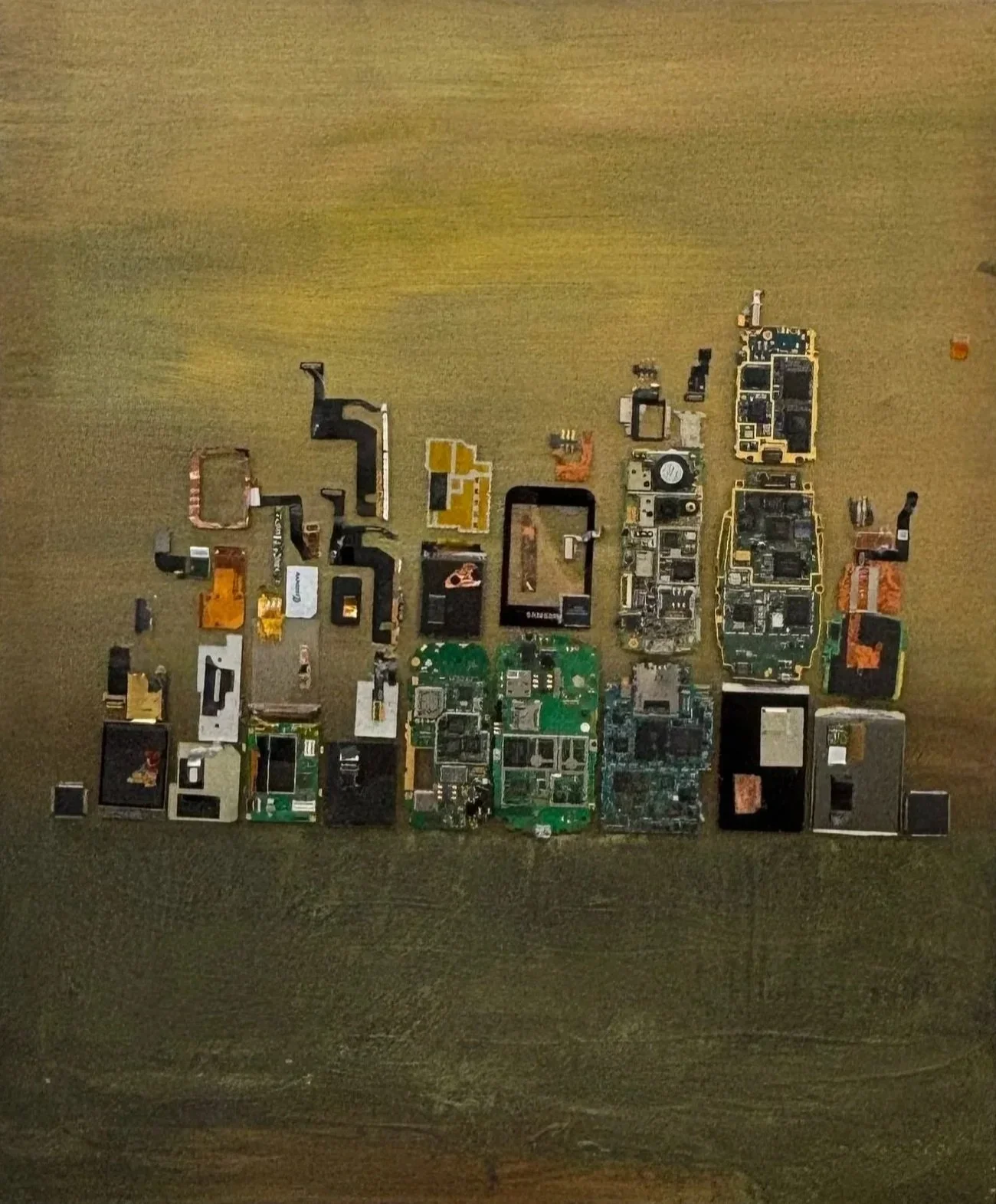
Birlis loves his materials. From his paints, which he uses sparingly, to the lenses and frames of the glasses he manufactures, and the sample catalogues of optical companies that find their way into his hands. He loves wood, plastic, metal, stopped clocks, the circuit boards of old devices. Birlis imagines. With the innocence of a child’s imagination, seeing skyscrapers where we see mobile-phone casings; suns where we see clocks; wings where we see sunglass lenses.
Time, stillness, and decay are key structural components of Birlis’s work. He looks to the past not nostalgically, but as though dissecting himself, his world, and the society around him. The transformation of materials ultimately traces the outline of our own individual transformation over time, along the path from youth to adulthood and decay. In this sense, his work is a mirror in which each of us may search for—and perhaps find—a fragment of ourselves, provided we are able to look without fear into our own personal abyss, as I once saw a young girl gaze into the small mirrored screens of mobile phones in one of the artist’s urban landscapes.”
Exhibition Curator: Vasiliki Papakosta
Graphic Design: Tzortzina Savvaki
Texts: Pantelis Mitsiou
General Supervision: Eleni Nomikou
Technical Support: Isa Hoti
Administrative Support: Eleftheria Papagianni
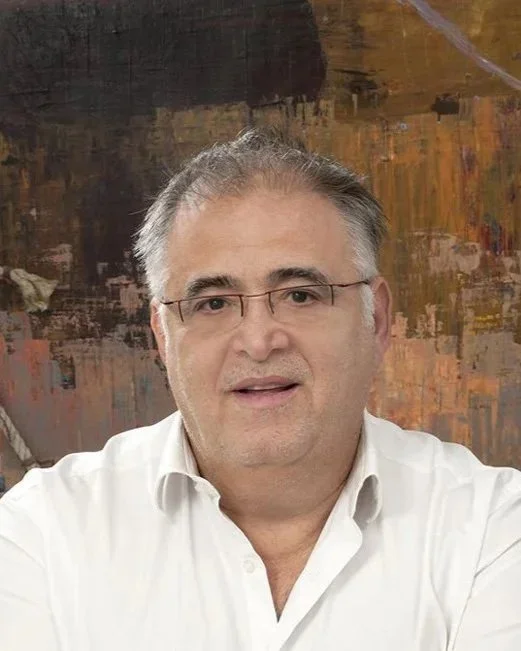
Thanasis Birlis was born in Kaisariani, graduated from the Boys’ High School of Ymittos, and studied optical science. He taught for eight years at the Technological Educational Institute, in the Department of Optics and Optometry. He has been active in the optical business sector and is the founder of the Ofthalmos chain of optical stores. In 1996, he was the first to introduce the franchise system to the field of optics in Greece.
At the same time, he has been involved in art, painting, creating small sculptures, and more. In 2006, he exhibited work on the theme of recycling in Psychiko, at the Monochoro Gallery, curated by G. Seretis. Since then, he has remained present in the visual arts scene.
In 2007, he presented work at the Canto multipurpose venue in Glyfada, curated by A. Sotiriou, and at Art-sa Gallery on Kea, curated by S. Antonopoulou. In 2010, he took part in Ofthalmofanes in Gazi, and in the same year at Zoumboulakis Gallery, curated by Iris Kritikou. He collaborated again with Ms. Kritikou in 2011 for the exhibition Milestones at GENESIS Gallery. In 2014, he presented his work at the Garage multipurpose venue in Ilioupoli, and in 2017 his exhibition at MARINA KEAS Gallery in Vourkari, Kea, was curated by K. Marouli.
In 2018, at the Herakleidon Museum, he was introduced to the wider public also as a photographer, through the exhibition Invisible City. Alongside the photography exhibition, the Herakleidon Museum Shop presented his renowned “insects”—small sculptures made from discarded materials from the optical industry. A similar exhibition had previously taken place at IANOS in 2013, followed in 2018 by a presentation at the Benaki Museum Shop. Finally, in 2022, his first photography book, titled Cuba, was published.
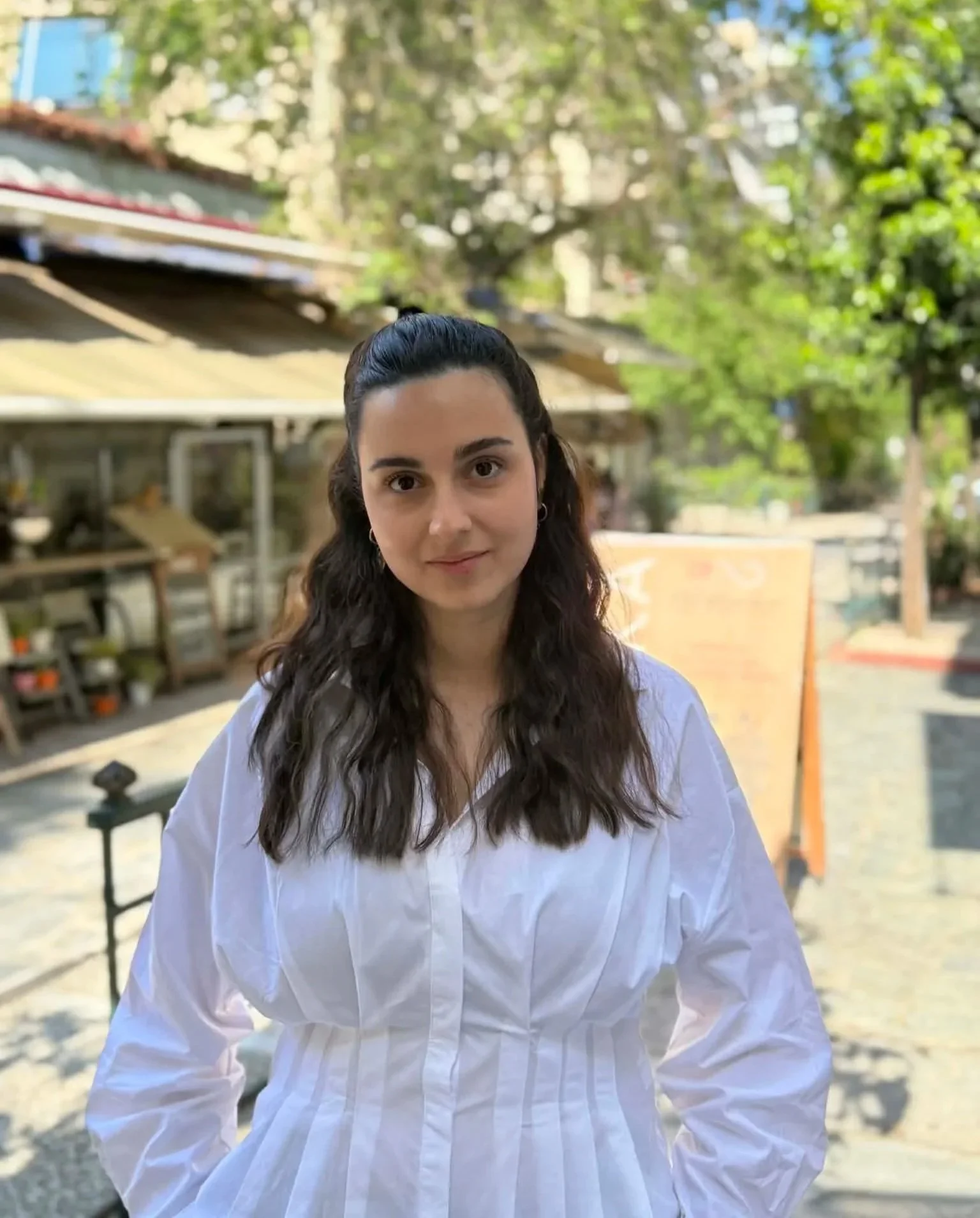
Vasiliki Papakosta, an archaeologist from the National and Kapodistrian University of Athens and holder of an MSc in Museology with a specialization in Cultural Communication, has been working at the Herakleidon Museum from 2022 to the present.
During her collaboration with the Museum, she has successfully carried out duties related to visitor reception, visitor services, and guided tours, as well as the design and implementation of educational programs.
She has also undertaken the reception and briefing of special audiences, excluded individuals, and social groups.
Since 2024, she has served as the Museum’s Head Museologist and Curator. She manages the Museum’s social media presence, is responsible for its public image, and represents the Museum in networks in Greece and abroad.
Two texts by Pantelis Mitsiou, Head of Marketing and Development at the Museum, accompany the sections of the exhibition dedicated to “ships” and “urban landscapes.”
Ships
And suddenly, the sea was no longer sandy beaches; it was no longer tavernas by the shore. Ships were no longer landing craft and ferries, fishing boats and freighters anchored off Piraeus. A host of new—unknown—words swept through our minds like a squall: stralia, stokolo, pallinorio, podostamo, karamosali. Words carried on the wind of Thanos Mikroutsikos’s music, which was destined to introduce us to Nikos Kavvadias, to take us on journeys to unknown and exotic places that no travel guide will ever show you—and, for many of us, to forever change the way we see the sea.
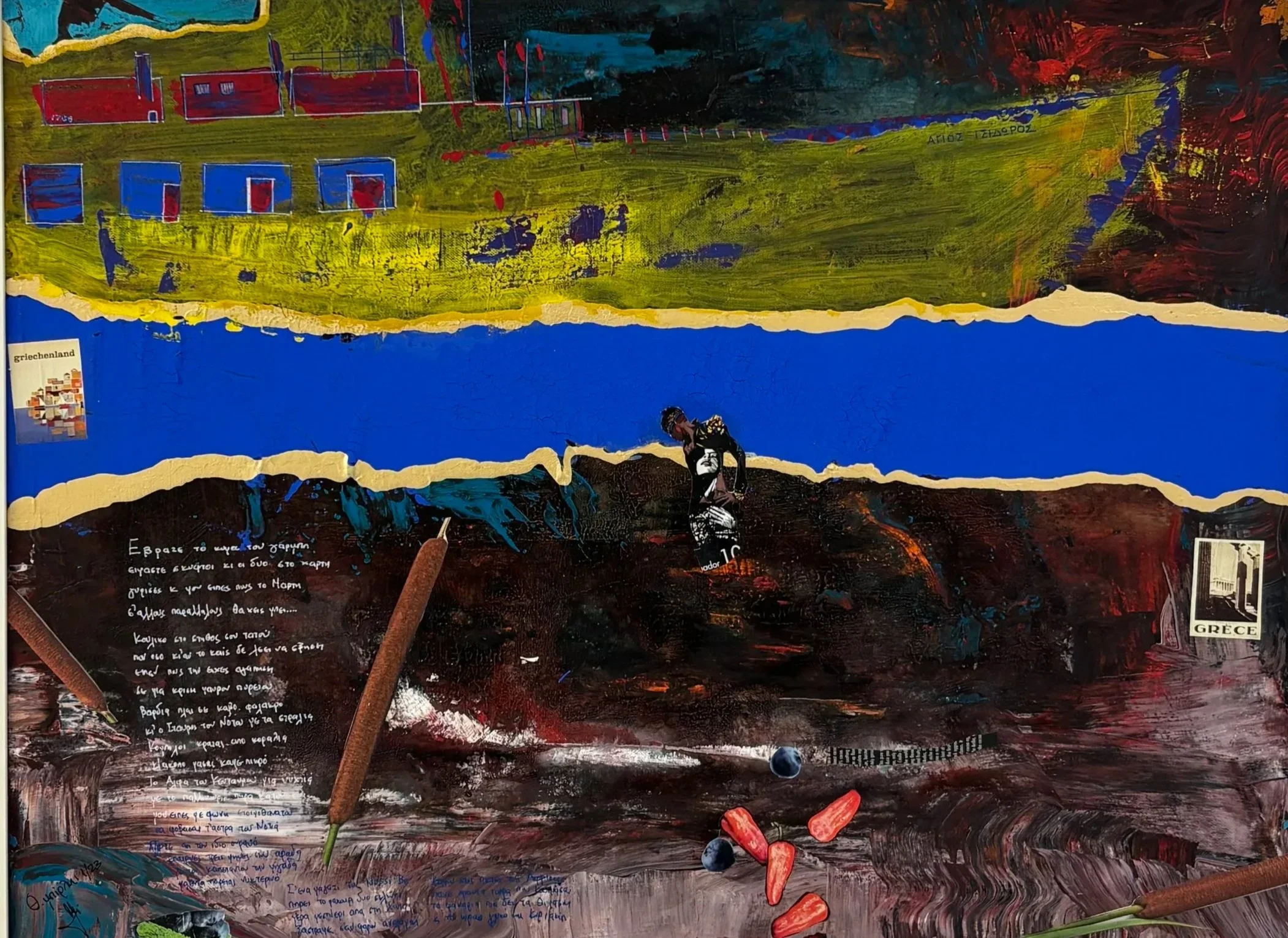
Among the many was Thanasis Birlis. His seascapes carry the corrosion of salt on the heavy sheet metal of ships; they are soaked in the sweat of the sailor; they have imprisoned the fleeting shadow of a woman’s figure in a dark house in a grimy port; they have the taste of a mother’s tears; they softly whistle the song of nostos—for land when one is at sea, and for the sea when one is on land. His paintings of shipwrecked hulks mirror the eyes of all those who refused—and still refuse—to “wrap up the barqueta” of their lives.
Urban Landscapes
In his futuristic, almost dystopian urban landscapes, Thanasis Birlis gathers all his anxieties, obsessions, memories, loves, fears, and desires. In his suspended cities, time, maritime life, nature, and the environment are all present—their presence sometimes emphatically declared, sometimes merely implied.
Color exists in order to emphasize and provoke emotion; the materials push the works toward the neighborhood of trash art, yet the combination of subject, colors, materials, and symbols lifts them into an expressive universe entirely his own.
Across the whole of his work, the message—if there is one—does not reach the viewer as a revelation, but as an active process of discovery.